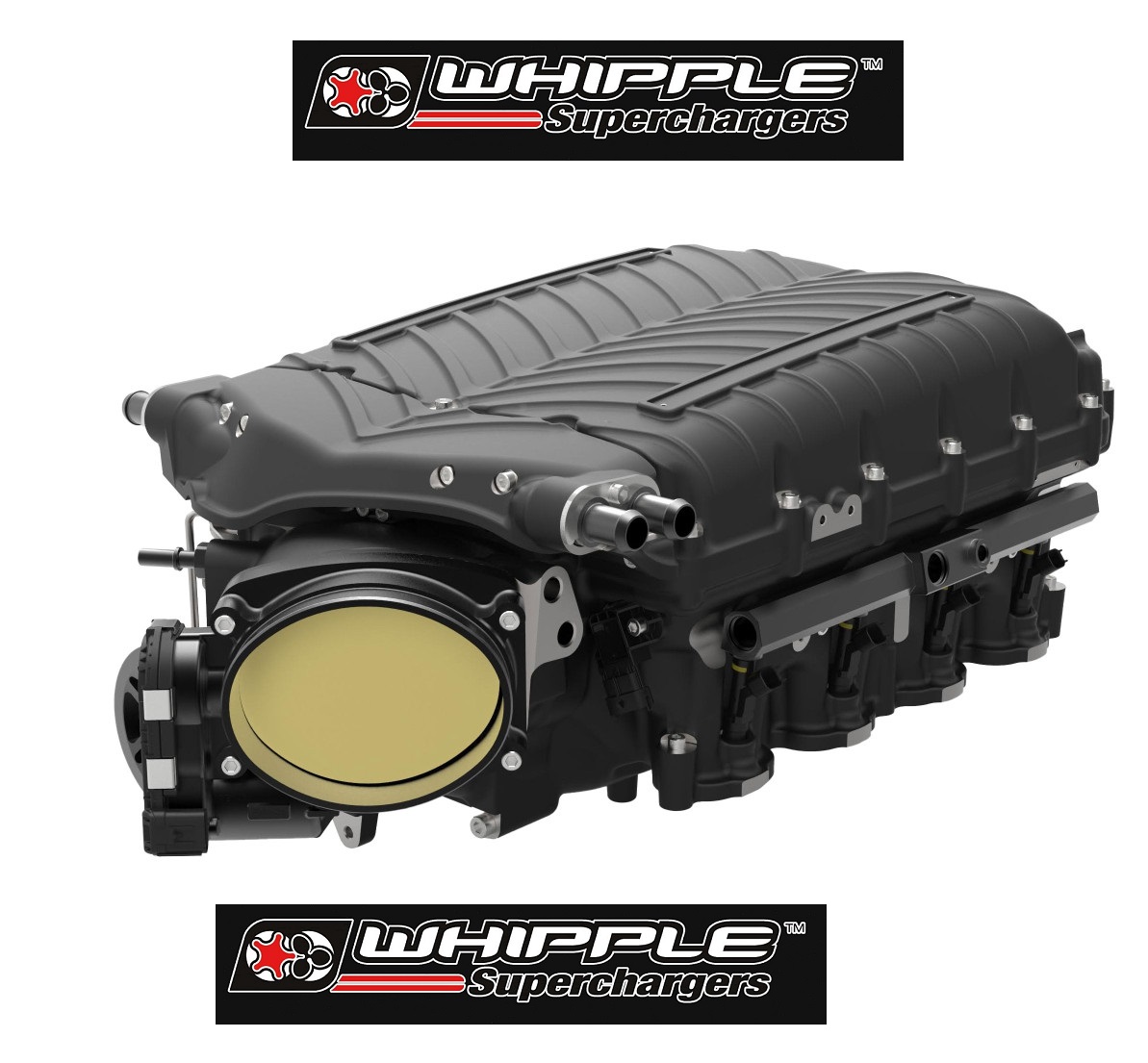
3.8 gen5 Whipple supercharger upgrade kit for 2020-22 Mustang Shelby GT500

Katia de Peyer $ 97.14
Description Whipple Superchargers WK-2550-38 W235RF Gen 5 3.8L Supercharger Kit (2020 5.2L Shelby GT500) What’s Included: 3.8L Head Unit 3.8L Intercooler and Lid Setup Supercharger Pulley Belt Drive System Heat Exchanger Cold Air Intake 132mm Throttle Body Heat Exchanger Intercooler Reservoir Intercooler pump and all hoses for the intercooler system Engine Lowering Brackets (Required to clear the factory hood) FLASH TOOL NOT INCLUDED All Necessary Items to Install Supercharger Kit With the new direct injection setup on the 2018 Mustang GT, Whipple Superchargers had their work cut out for them on making a blower that was incredibly efficient while also fitting within the application. This is when the Gen 5 3.0L that we have come to love was born. The 2018s were making insane power, even on mostly stock setups (we made 755rwhp in our 2018 Mustang GT with 93 octane). Whipple knew they needed to adapt the Gen 5 rotor technology into other platforms… SO THEY DID. First releasing the Gen 5 3.0L for the 2011-2017 Mustang GTs and then the Cobra and GT500 setups after that. And now, it’s time for Whipple to step up the game even more with their new Gen 5 3.8L setup for the 2011-2021 Mustang GT / Boss 302 / Shelby GT350! The Gen 5 3.8L Whipple Supercharger will carry similar features to the 3.0L Whipple. It has all new bearings, gears, rotors and housing that allow the new supercharger to spin faster, longer and safer while producing more power than any other positive displacement supercharger ever built. Compared to it’s little sibling, the 3.8L supercharger will have an improved rotor profile, increased volume, improved sealing and increased efficiency. The 3.8L will also feature a new inlet design that is 2 pieces, allowing easier access for the rear bolts, your spark plugs and other items that previous models made difficult to access. In testing, the 3.8L has a roughly 6% increase in isentropic efficiency compared to the 3.0L. Uh, wtf does that mean? Isentropic efficiency of a compressor is the ratio of actual work vs the work at isentropic conditions. An Isentropic process is basically an ideal thermodynamics process. Isentropic efficiency in laymen’s terms would be a comparison of the output in actual conditions vs the ‘ideal’ conditions. /thermogenics lesson) SIDE-BY-SIDE When looking at side-by-side photos of the housings and rotors of both the 3.0L and 3.8L Whipple superchargers, you can see that the designs are similar except for the fact that the 3.8L is much larger. Also, compared to the larger volume 4.0L, the 3.8L is slightly taller however it is roughly 60mm shorter (just over 2 inches), giving it some serious girth while not taking out your firewall in the process. Who doesn’t love some girth?
ISBN:

Contains:

Format:

Pages:

Contents

1. My Dance, Our Symphony
2. New York
3. 16 Langford Place
4. The Chamber Music Society
5. Musical Roots
6. Horovitz, Milhaud, and Mozart
7. Life in New York
8. Musical Colleagues and Friends
9. Challenges
10. Carnegie Concert Hall and the World of Musicians
11. Porto Vecchio
12. A Music Festival at Sea
13. The Assisi Festa Musica Pro
14. Castello di Duino and a Turning Point
15. The Washington Sinfonia
16. More Musical Colleagues and Collaborations
17. Sweet and Sour
18. Master Teacher, Master Passeur

Acknowledgements
Newspaper, Text and Photographic Credits
Appendix A: Gervase de Peyer, Principal Clarinet
Appendix B: Select Recordings
Appendix C: An Extract from Portraits 1: Gervase de Peyer
Select Bibliography
About the Author

About the Author

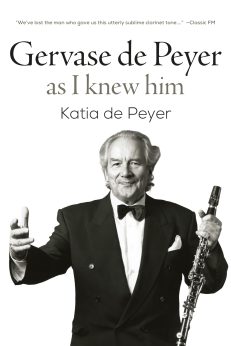
Katia de Peyer’s first book Dancing with MySelf, Sensuous Exercises for Body, Mind and Spirit (Nucleus Publications, 1991; La Source Press, 2026) introduced her method of inner-centering through movement, hailed by Diane von Furstenberg as a whole new attitude about exercising. Her second book Enjoy Your Healing Power (La Source Press, 2025) is an intuitive, helpful guide for developing our healing power.  A ballet dancer born in Paris who lived in Spain to further her studies in flamenco, Katia moved to New York in the late sixties to start a successful career as a personal trainer. There she met the virtuoso clarinettist Gervase de Peyer in 1976.  She and Gervase married in 1980 and lived for two decades in the US and then in the UK until Gervase’s death in 2017.  Katia continues her work as a writer and healer in London and New York.

You may also like…